https://www.imosver.com/es/libros/hasidism-00104557950010455795Hasidism14.16Famous Zionist philosopher Martin Buber introduces the philosophies of Hasidism to a Western audience in his modern masterpiece. This book is a result of forty years of study, and Buber interprets thehttps://static.serlogal.com/imagenes_small/9780806/978080653032.jpgLibrosLibros/FILOSOFIAEn stockIBD PODIPRINT000https://static.serlogal.com/imagenes_small/9780806/978080653032.jpgALO00829890010480122ALO0067790ALO007488014.9150.751948/01/019780806530321Martin BuberLibrosaño_1948idioma_InglésIautor_Martin Bubersaga_.
Este tipo de cookies permiten al usuario la navegación a través de una página web, plataforma o aplicación y la utilización de las diferentes opciones o servicios que en ella existan.
imosverlaravel_session
Descripción
Esta cookie es necesaria para que el sitio web funcione y no se pueden desactivar en nuestros sistemas
Duración
Sesión
Dependencias
Dominio
imosver.com
OCT8NE
Descripción
Esta cookie se utiliza para el correcto funcionamiento del Chat de Oct8ne para prestar el servicio de atención al cliente al usuario
Son aquéllas que posibilitan el seguimiento y análisis del comportamiento de los usuarios en nuestra página. La información recogida se utiliza para la medición de la actividad de los usuarios en la web y la elaboración de perfiles de navegación de los usuarios.
_clsk
Descripción
Registra datos estadísticos del comportamiento del visitante en la web. Esto se utiliza para análisis internos por el operador de la web
Duración
1 año
Dependencias
_clsk,MUID,_clck
Dominio
logglytrackingsession
Descripción
Identifica y registra la sesión del usuario con fines analíticos.
Duración
Sesión
Dependencias
Dominio
.imosver.com
GOOGLE_ANALYTICS
Descripción
Registra una identificación única que se utiliza para generar datos estadísticos acerca de cómo utiliza el visitante el sitio web.
Duración
1 año
Dependencias
Dominio
.imosver.com
Son aquellas que nos permiten adaptar la navegación en nuestra página web a sus preferencias (Ej. Idioma, navegador utilizado, …etc)
_fbp
Descripción
Utilizado por Facebook para ofrecer una serie de productos publicitarios, como ofertas en tiempo real de terceros anunciantes.
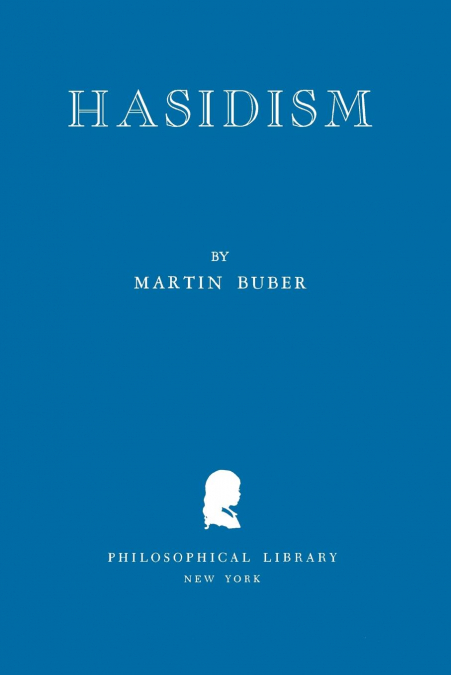
Famous Zionist philosopher Martin Buber introduces the philosophies of Hasidism to a Western audience in his modern masterpiece. This book is a result of forty years of study, and Buber interprets the ideas and motives that underlie the great Jewish religious movement of Hasidism and its creator, Baal-Shem. Buber?s interpretation of Hasidic stories and teachings influenced a new generation to turn to Hasidic teachings, and his collection Hasidism continues to affect Jewish scholarship worldwide. With his lasting work in both Hasidism and Zionism, Buber imagined a renewal in the Jewish faith, and his philosophies and idealisms enrich the pages of this book, making it a must-read for any Jewish or religious scholar. Martin Buber (1878?1965) was an Austrian-born Jewish philosopher, essayist, translator, and editor most known for his German translation of the Bible, his religious existentialism philosophy, and his role in the Zionist movement. Buber grew up in Vienna during the rule of the Austro-Hungarian Empire, which fell after World War I. He was raised by his grandparents, who introduced him to Zionism and Hasidism at a young age. Buber had a knack for language and learned more than ten different languages during his school years. After school, Buber was recruited to lecture on Jewish religious studies at universities, educational centers, and Jewish groups. In 1938, as the Nazi Party gained power, Buber left Germany and settled in Jerusalem. He continued to lecture in Jerusalem at Hebrew University. Known for politically utopist ideals including anarchism and socialism, Buber became a leader in the Zionist movement and supported a bi-national solution to the Israel-Palestine conflict. In 1951 he received the Goethe award of the University of Hamburg and in 1953 the Peace Prize of the German Book Trade. In 1958, he won the Israel Prize. In 1963, he won the Erasmus Award in Amsterdam. He lived and worked in Jerusalem until his death in 1965.