- Libros
- FANTASTICA
- Maluco, la novela de los descubridores
- Libros
- FANTASTICA
- Maluco, la novela de los descubridores
Sinopsis Maluco, la novela de los descubridores
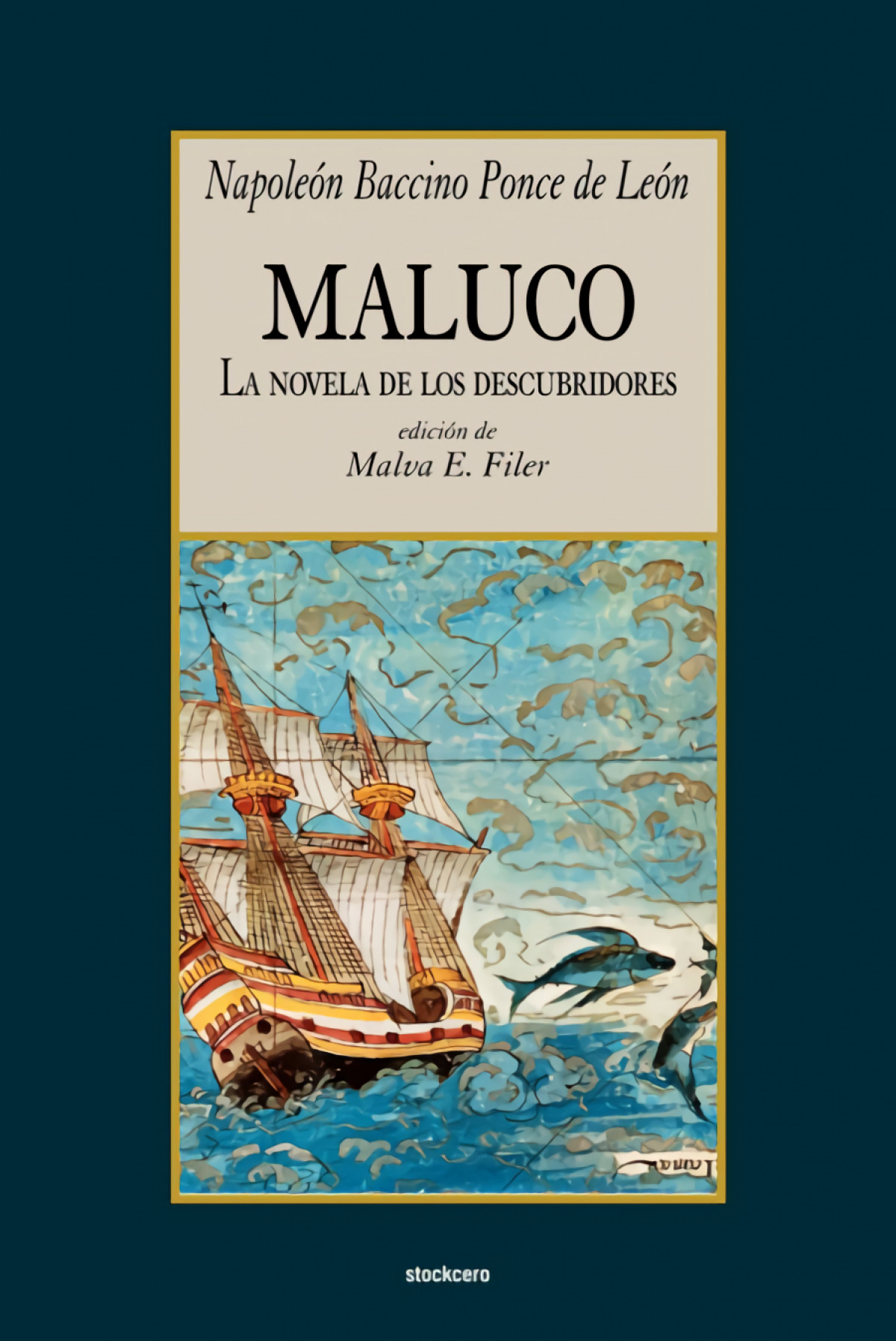
At first glance, Maluco, la novela de los descubridores, by the Uruguayan novelist Napoleón Bacino Ponce de León (Montevideo 1947) is about Hernando de Magalhaes' first expedition around the world, as described by the fleet's jester who, in a letter addressed to an aged Charles I of Spain, in his declining years, asking that the king intercede 'with your son, our beloved Phillip, and ask that he reinstate the pension that I lost because I sought the truth in villages and public squares.' Of course his claim implies acknowledgement of himself as one of the nineteen survivors, thus documenting the truth of his deeds and, to some extent, of the whole endeavour. The symbolic wealth of Maluco becomes apparent as the possibility of a circular ending is suggested, interwoven with profound doubts. Did this journey really take place? One hypothesis suggests that it was an inner journey. Can any journey be riskier or more important than an inner one? These doubts assail the king himself, now on his deathbed, and he consults his chronicler, Juan Ginés Sepulveda. The king's queries are not explicit in the novel, but are reflected in the careful answers of the chronicler, and the inclusion of this response as an Appendix reinforces its reflective, mirror-image quality. Prof. Malva E. Filer's introduction discusses the novel's relationship to theories of the New Historical Novel, as developed by Seymour Menton and other critics, and also points out Napoleón Bacino's ability to transcend 'the historical framework and the political and social conflicts involved in the narration, as well as the associations that may be established with the time context when it was written, or with interpretations that depend on literary criticism theoretical models.' In her notes and introduction to the present edition, Prof. Malva E. Filer highlights Maluco's 'long lasting value, precisely because it opens the possibility of multiple readings while dramatizing the dreams and ambitions that always drive human conduct, casting mankind into adventure and displays of daring bravery, and at the same time unleashing its passions and destructive impulse.' Maluco is one of those literary works filled with universality and timelessness, the two qualities that establish a book as a classic, a work of fiction through which every reader can recognize the parameters of his own human condition. Maluco obtained: Premio de Novela 'Casa De Las Américas' 1989-1990 in La Habana, Cuba. Premio Latinoamericano de Narrativa 1990, by the Instituto Nacional de Bellas Artes de México and the Universidad de Colima. First runner-up to the Premio Internacional de Novela 'Rómulo Gallegos' 1991, after 'La Visita en el Tiempo', by Arturo Uslar Pietri. 'From start to finish we are in the hands of a master (...) a perceptive, sophiscated narrator who illustrates the importance of the art of storytelling. More than an account of hardships endured or individual histories, this a meditation on man's age old dream of eluding death and leaving his mark on the world as he journeys through life.' KIRKUS REVIEWS, N.Y.
EAN
9789871136513
Editorial
Año de edición
2006
Páginas
276
Idioma
Castellano
Colección
.
Alto
229
Ancho
152
32.56 €
- 5 % DTO
30.93 €
En stock
IMPRESIÓN BAJO DEMANDA