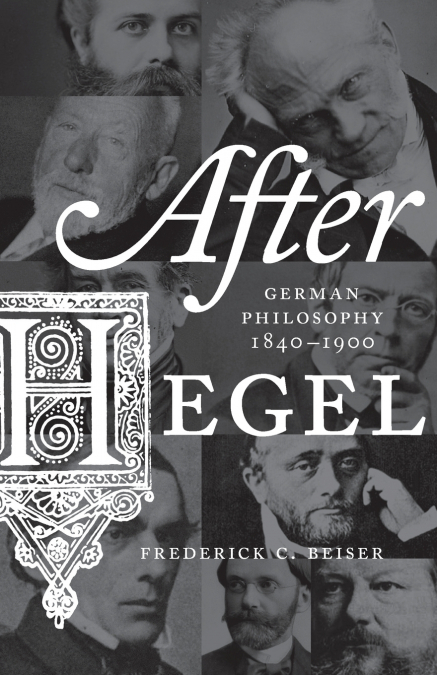
https://www.imosver.com/en/libros/after-hegel-00105164520010516452After Hegel35.83Histories of German philosophy in the nineteenth century typically focus on its first half-when Hegel, idealism, and Romanticism dominated. By contrast, the remainder of the century, after Hegel?s deahttps://static.serlogal.com/imagenes_small/9780691/978069117371.jpgLibrosLibros/FILOSOFIAEn stockIBD PODIPRINT000https://static.serlogal.com/imagenes_small/9780691/978069117371.jpg0010490122001020086437.7251.892016/09/139780691173719Beiser, Frederick C.Librosaño_2016idioma_EnglishIautor_Beiser, Frederick C.saga_.
Artículo
After Hegel
Beiser Frederick C.
IBD PODIPRINT
HISTORIA
Cookie Notice
We use cookies to ensure you get the best experience on our website.
Read cookie policy.
Gestionar preferencias de cookies
This type of cookie allows the user to browse a website, platform, or application and to use the different options or services that exist on it.
imosverlaravel_session
Description
This cookie is necessary for the website to function and cannot be disabled in our systems.
Duration
Sesión
Dependencies
Domain
imosver.com
OCT8NE
Description
This cookie is used for the proper functioning of the Oct8ne Chat to provide customer support service to the user.
These are those that enable the tracking and analysis of user behavior on our website. The information collected is used to measure user activity on the website and to create user browsing profiles.
_clsk
Description
It records statistical data about the visitor's behavior on the website. This is used for internal analysis by the website operator.
Duration
1 year
Dependencies
_clsk,MUID,_clck
Domain
logglytrackingsession
Description
Identifies and records the user session for analytical purposes.
Duration
Sesión
Dependencies
Domain
.imosver.com
GOOGLE_ANALYTICS
Description
Records a unique identifier that is used to generate statistical data about how the visitor uses the website.
Duration
1 year
Dependencies
Domain
.imosver.com
These are the ones that allow us to adapt the navigation on our website to your preferences (e.g., language, browser used, etc.).
_fbp
Description
Used by Facebook to offer a series of advertising products, such as real-time bids from third-party advertisers.
Histories of German philosophy in the nineteenth century typically focus on its first half-when Hegel, idealism, and Romanticism dominated. By contrast, the remainder of the century, after Hegel?s death, has been relatively neglected because it has been seen as a period of stagnation and decline. But Frederick Beiser argues that the second half of the century was in fact one of the most revolutionary periods in modern philosophy because the nature of philosophy itself was up for grabs and the very absence of certainty led to creativity and the start of a new era. In this innovative concise history of German philosophy from 1840 to 1900, Beiser focuses not on themes or individual thinkers but rather on the period?s five great debates: the identity crisis of philosophy, the materialism controversy, the methods and limits of history, the pessimism controversy, and the Ignorabimusstreit. Schopenhauer and Wilhelm Dilthey play important roles in these controversies but so do many neglected figures, including Ludwig Büchner, Eugen Dühring, Eduard von Hartmann, Julius Fraunstaedt, Hermann Lotze, Adolf Trendelenburg, and two women, Agnes Taubert and Olga Pluemacher, who have been completely forgotten in histories of philosophy. The result is a wide-ranging, original, and surprising new account of German philosophy in the critical period between Hegel and the twentieth century.