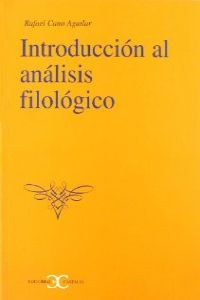
Synopsis Introducción al análisis filológico .
Prefacio. I.LA FILOLOGIA COMO CIENCIA DEL TEXTO. 1. ANALISIS FILOLOGICO Y FILOLOGIA. Constitución histórica de los quehaceres filológicos. La Filología en los siglos XIX y XX: distintas direcciones. Filología e "historia cultural"Filología y Lingüística. Filología y Literatura. Análisis filológico y Lingüística actual. 2. ANALISIS FILOLOGICO Y ENSEÑANZA DE LA LINGÜISTICA HISTORICA. II. LOS TEXTOS PRIMITIVOS: GLOSAS Y DOCUMENTOS. 1. TEXTOS PRIMITIVOS Y ROMANCE CASTELLANO. 2. LAS GLOSAS. TEXTO (Glosas Emilianenses. Glosas Silenses). Grafías y fonemas en el texto. Cuestiones gramaticales. Notas léxicas. Epílogo. 3. LOS DOCUMENTOS NOTARIALES. TEXTO (Documento, h. 1200, Palazuelos de la Sierra (Burgos). La fonética del texto. Grafías. Aspectos gramaticales. Notas léxicas. III. LA FORMACION DE LA LENGUA POETICA CASTELLANA. 1. LAS PRIMERAS MANIFESTACIONES POETICAS DEL CASTELLANO. 2. LA LENGUA DE LOS POEMAS EPICOS. TEXTO (Cantar de Mio Cid). Análisis fonético del texto. La estructura gramatical. Notas léxico-semánticas. 3. LA LENGUA DE LOS POEMAS DE CLERECIA. TEXTO (Libro de Alexandre). La fonética de los manuscritos. Cuestiones gramaticales. El léxico del texto. IV. EL DESARROLLO DE LA PROSA ROMANCE. 1. PRIMEROS TEXTOS EN PROSA CASTELLANA. 2. ALFONSO X Y LA PROSA CASTELLANA. TEXTO (Prólogo al Libro de los Juegos). La fonética del texto y sus grafías. La gramática del texto. Aspectos léxicos del texto. V. ORIGENES Y CONSTITUCION DEL ESPAÑOL CLASICO. 1. LOS ANTECEDENTES: LA LENGUA DEL SIGLO XV. TEXTO (Don Alonso de Cartagena, Prólogo a las Traducciones de Séneca). Aspectos gráficos y fonéticos del texto. La gramática del texto. Análisis del léxico del texto. 2. LA LENGUA CLASICA: EL ESPAÑOL DEL SIGLO XVI. TEXTO (Garcilaso de la Vega, "Ode ad florem Gnidi". Aspectos fonéticos del poema. Gramática y construcción del poema. El léxico del poema. 3. LA LENGUA BARROCA: QUEVEDO TEXTO: (La Cuna y la Sepultura). Grafías y fonética en el texto. Gramática del texto. El léxico del texto. VI. SIGLO DE ORO: LOS ORIGENES DEL ESPAÑOL ATLANTICO. 1.LA MANIFESTACION ESCRITA DE LA LENGUA HABLADA. 2. LOS ORIGENES DE LA MODALIDAD LINGOISTICA ANDALUZA Y SU PROYECCION EN EL ESPAÑOL DE AMERICA. TEXTO (Carta de un emigrante sevillano desde Indias). Análisis de las grafías y fonética del texto. Aspectos gramaticales.Vocabulario del texto. VII. LA LENGUA DE LOS GRAMATICOS: EL PROLOGO AL DICCIONARIO DE AUTORIDADES. 1. Los gramáticos españoles del siglo XV al XVIII. 2. El Diccionario de Autoridades de la Academia. TEXTO (Prólogo al Diccionario de Autoridades). La norma gráfica del texto académico. La gramática del texto académico. Vocabulario y significación del texto.
EAN
9788470398841
Publisher
Edition year
2012
Pages
208
Binding
Soft cover or pocket
Language
Spanish
Collection
INSTRUMENTA DIDACTICA
Height
300
Width
200