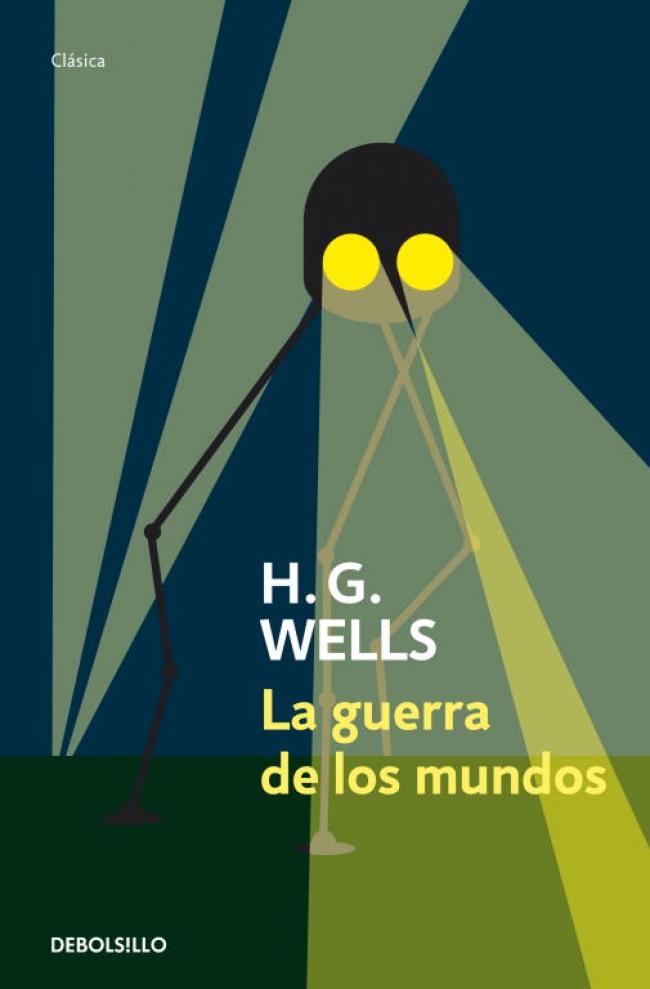
https://www.imosver.com/en/libros/la-guerra-de-los-mundos-64315700206431570020La guerra de los mundos9.45La guerra de los mundos, publicada en 1898, narra por primera vez en la historia de la literatura un tema que será recurrente desde entonces y originará todo un subgénero dentro de la ciencia ficción:https://static.imosver.com/imagenes_small/9788499/978849908363.jpgLibrosLibros/LITERATURA CLASICASin stockDEBOLSILLO000https://static.imosver.com/imagenes_small/9788499/978849908363.jpg00107856910010796957001079622600107965039.9550.52010/05/149788499083636Wells,H.G.Librosaño_2010idioma_SpanishCformato_Tapa blanda o Bolsilloautor_Wells,H.G.saga_CLASICA
Artículo
La guerra de los mundos
WellsH.G.
DEBOLSILLO
LITERATURA CLASICA
Cookie notice
We use cookies to ensure you get the best experience on our site
Read cookie policy.
Manage cookie preferences
This type of cookie allows the user to browse a website, platform, or application and to use the different options or services that exist on it.
imosver_session
Description
Essential first-party cookie. It keeps your session identified while you browse: your basket, your language and access to your account. The website cannot work without it.
Duration
120 minutes
Facilities
Domain
imosver.com
OCT8NE
Description
This cookie is used for the proper functioning of the Oct8ne Chat to provide customer support service to the user.
These are those that enable the tracking and analysis of user behavior on our website. The information collected is used to measure user activity on the website and to create user browsing profiles.
_clsk
Description
Microsoft Clarity first-party cookie. It groups the pages you visit into a single session in order to analyse your journey through the website.
Duration
1 days
Facilities
Domain
imosver.com
logglytrackingsession
Description
Identifies and records the user session for analytical purposes.
Duration
Session
Facilities
Domain
.imosver.com
GOOGLE_ANALYTICS
Description
Records a unique identifier that is used to generate statistical data about how the visitor uses the website.
Duration
1 Year
Facilities
Domain
.imosver.com
_clck
Description
Microsoft Clarity first-party cookie. It stores an anonymous browser identifier so that visits to this website can be attributed to the same user and usage statistics can be produced.
Duration
1 Year
Facilities
Domain
imosver.com
CLID
Description
Microsoft Clarity third-party cookie. It identifies the first time Clarity detects this browser on any website using the service.
Duration
1 Year
Facilities
Domain
clarity.ms
_ga
Description
Google Analytics cookie. It stores an anonymous browser identifier in order to distinguish users and produce website usage statistics.
Duration
2 Year
Facilities
Domain
.imosver.com
_ga_LZR660YW0M
Description
Google Analytics 4 cookie. It keeps the analytics session state so that visits and the journey through the website can be measured.
Duration
2 Year
Facilities
Domain
.imosver.com
These are the ones that allow us to adapt the navigation on our website to your preferences (e.g., language, browser used, etc.).
_fbp
Description
Used by Facebook to offer a series of advertising products, such as real-time bids from third-party advertisers.
Duration
3 Month
Facilities
Domain
.imosver.com
afiliado
Description
First-party affiliate programme cookie. It stores for 30 days the code of the affiliate that brought you to the website, so that the sale can be attributed to them.
Duration
1 Month
Facilities
Domain
imosver.com
MUID
Description
Microsoft third-party cookie. It identifies unique browsers visiting Microsoft sites and is used for advertising, analytics and other operational purposes.
Duration
1 Year
Facilities
Domain
clarity.ms
ANONCHK
Description
Microsoft third-party cookie. It indicates whether the MUID identifier is transferred to ANID, a cookie used for advertising purposes.
Duration
10 minutes
Facilities
Domain
clarity.ms
MR
Description
Microsoft third-party cookie. It indicates whether the MUID identifier must be refreshed.
Duration
7 days
Facilities
Domain
clarity.ms
SM
Description
Microsoft third-party cookie. It synchronises the MUID identifier across Microsoft domains.
Duration
Session
Facilities
Domain
clarity.ms
_fbc
Description
Meta cookie. It stores the identifier of the Facebook or Instagram advert you arrived from, in order to attribute the visit to that advertising campaign.
Duration
3 Month
Facilities
Domain
.imosver.com
_gcl_au
Description
Google Ads cookie. It records a visit coming from an advert so that advertising campaign conversions can be measured.
Duration
3 Month
Facilities
Domain
.imosver.com
_uetsid
Description
Microsoft Advertising cookie. It identifies your browsing session in order to measure conversions from Bing advertising campaigns.
Duration
1 days
Facilities
Domain
.imosver.com
_uetvid
Description
Microsoft Advertising cookie. It identifies your browser across visits in order to measure conversions from Bing advertising campaigns.
La guerra de los mundos, publicada en 1898, narra por primera vez en la historia de la literatura un tema que será recurrente desde entonces y originará todo un subgénero dentro de la ciencia ficción: la invasión hostil de la Tierra por extraterrestres procedentes de Marte, recibidos por una humanidad ingenua que tendrá que organizarse para impedir una destrucción masiva del planeta. A través de esta novela en la que las descripciones científicas, las premoniciones sobre el futuro de la tecnología y los entresijos de la política ocupan un lugar central, H. G. Wells nos habla sobre la vanidad y la seguridad ficticia de una humanidad autosatisfecha, y los peligros que acechan su supervivencia. «Las obras de Mr. Wells pertenecen, sin duda, a un tiempo y un grado de conocimiento científico futuro, muy alejado del presente pero no completamente fuera de los límites de lo posible.» JULIO VERNEWells nos habla sobre la vanidad y la seguridad ficticia de una humanidad autosatisfecha, y los peligros que acechan.Herbert George Wells (1866-1946) nació en Bromley (Reino Unido). Una beca le permitió estudiar en la Normal School of Science de Londres. Trabajó como aprendiz, contable, tutor y periodista hasta 1895, año en el que se dedicó por completo a escribir y en el que publicó su primera novela, La máquina del tiempo, en la que ya aparecía la explosiva mezcla de ciencia, política y aventura que haría de sus libros un éxito. Desde 1895 hasta su muerte, Wells escribió más de ochenta libros, entre los que destacan todas aquellas obras que contribuyeron a crear un género, la ciencia-ficción: El hombre invisible (1897), La guerra de los mundos (1898) y Las cosas del futuro (1933), todas llevadas al cine en varias ocasiones. Además de estas novelas, Wells escribió otras como Kipps (1905) o La historia de Mr Polly (1910), profundos retratos de su época; y novelas sociales, como Tono Bungay (1909) o Mr Britling va hasta el fondo (1916). Tras la Primera Guerra Mundial publicó un ensayo histórico que se haría muy popular en el Reino Unido, El esquema de la historia (1920). El pesimismo y las dudas acerca de la supervivencia del ser humano en una sociedad que la tecnología no había sido capaz de mejorar, impregnan sus últimas obras como Del 42 al 44 (1944) o El destino del homo sapiens (1945).