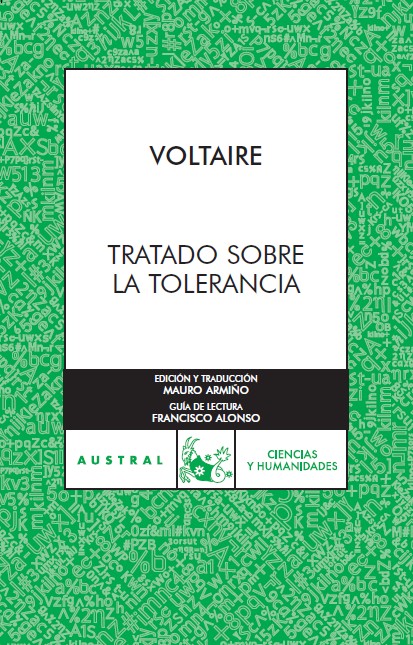
https://www.imosver.com/en/libros/tratado-sobre-tolerancia-99700171299970017129Tratado sobre tolerancia8.08En 1685, Luis XIV revoca el edicto de Nantes, que permitía la libertad de cultos en Francia. En este clima de intolerancia religiosa, Voltaire escribe el Tratado sobre la tolerancia con ocasión de la https://static.imosver.com/imagenes_small/9788467/978846702378.jpgLibrosLibros/NARRATIVASin stockESPASA CALPE000https://static.imosver.com/imagenes_small/9788467/978846702378.jpgCIM008230600105743080010456321ARC00848678.550.422012/03/159788467023787VOLTAIRELibrosaño_2012idioma_SpanishCformato_Tapa blanda o Bolsilloautor_VOLTAIREsaga_AUSTRAL CLASICA
Artículo
Tratado sobre tolerancia
VOLTAIRE
ESPASA CALPE
NARRATIVA
Cookie notice
We use cookies to ensure you get the best experience on our site
Read cookie policy.
Manage cookie preferences
This type of cookie allows the user to browse a website, platform, or application and to use the different options or services that exist on it.
imosver_session
Description
Essential first-party cookie. It keeps your session identified while you browse: your basket, your language and access to your account. The website cannot work without it.
Duration
120 minutes
Facilities
Domain
imosver.com
OCT8NE
Description
This cookie is used for the proper functioning of the Oct8ne Chat to provide customer support service to the user.
These are those that enable the tracking and analysis of user behavior on our website. The information collected is used to measure user activity on the website and to create user browsing profiles.
_clsk
Description
Microsoft Clarity first-party cookie. It groups the pages you visit into a single session in order to analyse your journey through the website.
Duration
1 days
Facilities
Domain
imosver.com
logglytrackingsession
Description
Identifies and records the user session for analytical purposes.
Duration
Session
Facilities
Domain
.imosver.com
GOOGLE_ANALYTICS
Description
Records a unique identifier that is used to generate statistical data about how the visitor uses the website.
Duration
1 Year
Facilities
Domain
.imosver.com
_clck
Description
Microsoft Clarity first-party cookie. It stores an anonymous browser identifier so that visits to this website can be attributed to the same user and usage statistics can be produced.
Duration
1 Year
Facilities
Domain
imosver.com
CLID
Description
Microsoft Clarity third-party cookie. It identifies the first time Clarity detects this browser on any website using the service.
Duration
1 Year
Facilities
Domain
clarity.ms
_ga
Description
Google Analytics cookie. It stores an anonymous browser identifier in order to distinguish users and produce website usage statistics.
Duration
2 Year
Facilities
Domain
.imosver.com
_ga_LZR660YW0M
Description
Google Analytics 4 cookie. It keeps the analytics session state so that visits and the journey through the website can be measured.
Duration
2 Year
Facilities
Domain
.imosver.com
These are the ones that allow us to adapt the navigation on our website to your preferences (e.g., language, browser used, etc.).
_fbp
Description
Used by Facebook to offer a series of advertising products, such as real-time bids from third-party advertisers.
Duration
3 Month
Facilities
Domain
.imosver.com
afiliado
Description
First-party affiliate programme cookie. It stores for 30 days the code of the affiliate that brought you to the website, so that the sale can be attributed to them.
Duration
1 Month
Facilities
Domain
imosver.com
MUID
Description
Microsoft third-party cookie. It identifies unique browsers visiting Microsoft sites and is used for advertising, analytics and other operational purposes.
Duration
1 Year
Facilities
Domain
clarity.ms
ANONCHK
Description
Microsoft third-party cookie. It indicates whether the MUID identifier is transferred to ANID, a cookie used for advertising purposes.
Duration
10 minutes
Facilities
Domain
clarity.ms
MR
Description
Microsoft third-party cookie. It indicates whether the MUID identifier must be refreshed.
Duration
7 days
Facilities
Domain
clarity.ms
SM
Description
Microsoft third-party cookie. It synchronises the MUID identifier across Microsoft domains.
Duration
Session
Facilities
Domain
clarity.ms
_fbc
Description
Meta cookie. It stores the identifier of the Facebook or Instagram advert you arrived from, in order to attribute the visit to that advertising campaign.
Duration
3 Month
Facilities
Domain
.imosver.com
_gcl_au
Description
Google Ads cookie. It records a visit coming from an advert so that advertising campaign conversions can be measured.
Duration
3 Month
Facilities
Domain
.imosver.com
_uetsid
Description
Microsoft Advertising cookie. It identifies your browsing session in order to measure conversions from Bing advertising campaigns.
Duration
1 days
Facilities
Domain
.imosver.com
_uetvid
Description
Microsoft Advertising cookie. It identifies your browser across visits in order to measure conversions from Bing advertising campaigns.
En 1685, Luis XIV revoca el edicto de Nantes, que permitía la libertad de cultos en Francia. En este clima de intolerancia religiosa, Voltaire escribe el Tratado sobre la tolerancia con ocasión de la muerte de Jean Calas y anima al resto de los filósofos a hacer la guerra sistemáticamente, al Infame, es decir, a cualquier religión, pero, sobre todo, a la católica de Roma. Voltaire, a diferencia de Rousseau, pretende pasar de una oposición meramente intelectual a una lucha activa centrada en los casos particulares. El caso de Jean Calas, comerciante jansenista que fue declarado culpable en un juicio manipulado, y ajusticiado por un delito no cometido, iba a ser la primera aplicación de esa consigna que daba al resto de los filósofos. Voltaire organiza los datos de que dispone en una estrategia de combate sin antecedentes en la historia y que sólo puede compararse con una moderna campaña de prensa. La historia de los Calas es, en el Tratado sobre la tolerancia, un trampolín para hacer un juicio al fanatismo: de los detalles particulares Voltaire se eleva a las alturas bíblicas, históricas, metafísicas y conceptuales sin olvidar el recurso a los detalles del sentimiento personal. El autor se encarna en los perseguidos para buscar el triunfo final de la filosofía y de las luces sobre el Infame.En 1685, Luis XIV revoca el edicto de Nantes, que permitía la libertad de cultos en Francia. En este clima de intolerancia religiosa, Voltaire escribe el Tratado sobre la tolerancia.