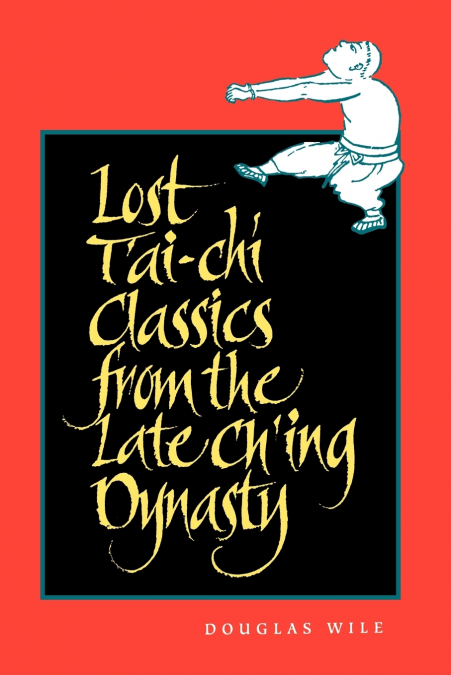
https://www.imosver.com/fr/libros/lost-tai-chi-classics-from-the-late-ching-dynasty-00107643170010764317Lost T?ai-chi Classics from the Late Ch?ing Dynasty41.21Analysis of rich new material allows Wile to make a fresh survey of longstanding issues: the origins of T?ai-chi, the authorship of the classics, the differences between Wu, Yang, and Li, and the rolehttps://static.serlogal.com/imagenes_small/9780791/978079142654.jpgLibrosLibros/DEPORTESEn stockIBD PODIPRINT000https://static.serlogal.com/imagenes_small/9780791/978079142654.jpg43.3852.171996/08/169780791426548Douglas WileLibrosaño_1996idioma_AnglaisIautor_Douglas Wilesaga_.
Artículo
Lost T?ai-chi Classics fr
Douglas Wile
IBD PODIPRINT
HISTORIA
Avis sur les Cookies
Nous utilisons des cookies pour vous garantir la meilleure expérience sur notre site.
Lire la politique des cookies.
Gestionar preferencias de cookies
Ce type de cookies permet à l'utilisateur de naviguer sur un site web, une plateforme ou une application et d'utiliser les différentes options ou services qui y existent.
imosverlaravel_session
Description
Ce cookie est nécessaire au fonctionnement du site web et ne peut pas être désactivé dans nos systèmes.
Durée
Sesión
Dépendances
Domaine
imosver.com
OCT8NE
Description
Ce cookie est utilisé pour le bon fonctionnement du Chat Oct8ne afin de fournir le service d'assistance à la clientèle à l'utilisateur.
Ce sont celles qui permettent le suivi et l'analyse du comportement des utilisateurs sur notre site. Les informations collectées sont utilisées pour mesurer l'activité des utilisateurs sur le site web et pour élaborer des profils de navigation des utilisateurs.
_clsk
Description
Il enregistre des données statistiques sur le comportement des visiteurs sur le site web. Ceci est utilisé pour des analyses internes par l'opérateur du site.
Durée
1 année
Dépendances
_clsk,MUID,_clck
Domaine
logglytrackingsession
Description
Identifie et enregistre la session de l'utilisateur à des fins analytiques.
Durée
Sesión
Dépendances
Domaine
.imosver.com
GOOGLE_ANALYTICS
Description
Enregistre un identifiant unique qui est utilisé pour générer des données statistiques sur la façon dont le visiteur utilise le site web.
Durée
1 année
Dépendances
Domaine
.imosver.com
Ce sont celles qui nous permettent d'adapter la navigation sur notre site web à vos préférences (ex. : langue, navigateur utilisé, etc.).
_fbp
Description
Utilisé par Facebook pour proposer une série de produits publicitaires, tels que des offres en temps réel de publicitaires tiers.
Synopsis Lost T?ai-chi Classics from the Late Ch?ing Dynasty
Analysis of rich new material allows Wile to make a fresh survey of longstanding issues: the origins of T?ai-chi, the authorship of the classics, the differences between Wu, Yang, and Li, and the roles of such figures as Chang San-feng, Wang Tsung-yueh, Chiang Fa, and the formerly missing link, Ch?ang Nai-chou.Douglas Wile translates and analyzes four collections of recently released nineteenth-century manuscripts on T?ai-chi ch?uan. These writings of Wu?s older brothers Ch?eng-ch?ing and Ju-ch?ing, and his nephew Li I-yu, together with the transmissions of Yang Pan-hou, represent a significant addition to the seminal literature. The rich new texts allow us to make a fresh survey of longstanding issues in T?ai-chi history: the origins of the art, the authorship of the 'classics,' the differences between Wu, Yang, and Li, and the roles of Chang San-feng, Wang Tsung-yueh, Chiang Fa, and the formerly missing link, Ch?ang Nai-chou. The original Chinese texts of the four new sets of classics have been appended for the convenience of Chinese readers and scholars.The book reconsiders the world of the Wu, Yang, and Li families of Yung-nien and reconstructs it against the background of the Opium Wars, the Taiping Rebellion, and the decline of the Manchu dynasty. New biographical sources illuminate the domestic and political lives of the Yung-nien circle and their orientation to the late imperial intellectual trends. The development of T?ai-chi ch?uan in the nineteenth century is explored in the context of China?s cultural response to the challenge of the West and the role of body-centered arts in Asia during the drive for independence and the ongoing search for national identity.