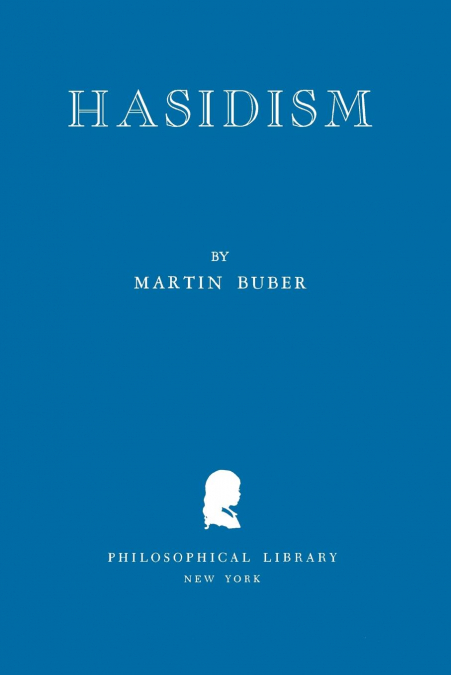
https://www.imosver.com/pt/libros/hasidism-00104557950010455795Hasidism14.16Famous Zionist philosopher Martin Buber introduces the philosophies of Hasidism to a Western audience in his modern masterpiece. This book is a result of forty years of study, and Buber interprets thehttps://static.serlogal.com/imagenes_small/9780806/978080653032.jpgLibrosLibros/FILOSOFIAEn stockIBD PODIPRINT000https://static.serlogal.com/imagenes_small/9780806/978080653032.jpgALO00829890010480122ALO0067790ALO007488014.9150.751948/01/019780806530321Martin BuberLibrosaño_1948idioma_InglêsIautor_Martin Bubersaga_.
Artículo
Hasidism
Martin Buber
IBD PODIPRINT
FILOSOFIA
Aviso de Cookies
Utilizamos cookies para garantir a melhor experiência em nosso site.
Ler política de cookies.
Gestionar preferencias de cookies
Este tipo de cookies permitem ao usuário a navegação através de uma página web, plataforma ou aplicação e a utilização das diferentes opções ou serviços que nela existam.
imosverlaravel_session
Descrição
Este cookie é necessário para o funcionamento do site e não pode ser desativado em nossos sistemas.
Duração
Sesión
Dependências
Domínio
imosver.com
OCT8NE
Descrição
Este cookie é utilizado para o correto funcionamento do Chat da Oct8ne para prestar o serviço de atendimento ao cliente ao usuário.
São aquelas que possibilitam o acompanhamento e análise do comportamento dos usuários em nossa página. A informação recolhida é utilizada para a medição da atividade dos usuários na web e a elaboração de perfis de navegação dos usuários.
_clsk
Descrição
Regista dados estatísticos do comportamento do visitante no site. Isto é utilizado para análises internas pelo operador do website.
Duração
1 ano
Dependências
_clsk,MUID,_clck
Domínio
logglytrackingsession
Descrição
Identifica e regista a sessão do usuário para fins analíticos.
Duração
Sesión
Dependências
Domínio
.imosver.com
GOOGLE_ANALYTICS
Descrição
Regista um identificador único que é utilizado para gerar dados estatísticos sobre como o visitante utiliza o sítio web.
Duração
1 ano
Dependências
Domínio
.imosver.com
São aquelas que nos permitem adaptar a navegação em nosso site às suas preferências (ex.: idioma, navegador utilizado, etc.).
_fbp
Descrição
Utilizado pelo Facebook para oferecer uma série de produtos publicitários, como ofertas em tempo real de anunciantes terceiros.
Famous Zionist philosopher Martin Buber introduces the philosophies of Hasidism to a Western audience in his modern masterpiece. This book is a result of forty years of study, and Buber interprets the ideas and motives that underlie the great Jewish religious movement of Hasidism and its creator, Baal-Shem. Buber?s interpretation of Hasidic stories and teachings influenced a new generation to turn to Hasidic teachings, and his collection Hasidism continues to affect Jewish scholarship worldwide. With his lasting work in both Hasidism and Zionism, Buber imagined a renewal in the Jewish faith, and his philosophies and idealisms enrich the pages of this book, making it a must-read for any Jewish or religious scholar. Martin Buber (1878?1965) was an Austrian-born Jewish philosopher, essayist, translator, and editor most known for his German translation of the Bible, his religious existentialism philosophy, and his role in the Zionist movement. Buber grew up in Vienna during the rule of the Austro-Hungarian Empire, which fell after World War I. He was raised by his grandparents, who introduced him to Zionism and Hasidism at a young age. Buber had a knack for language and learned more than ten different languages during his school years. After school, Buber was recruited to lecture on Jewish religious studies at universities, educational centers, and Jewish groups. In 1938, as the Nazi Party gained power, Buber left Germany and settled in Jerusalem. He continued to lecture in Jerusalem at Hebrew University. Known for politically utopist ideals including anarchism and socialism, Buber became a leader in the Zionist movement and supported a bi-national solution to the Israel-Palestine conflict. In 1951 he received the Goethe award of the University of Hamburg and in 1953 the Peace Prize of the German Book Trade. In 1958, he won the Israel Prize. In 1963, he won the Erasmus Award in Amsterdam. He lived and worked in Jerusalem until his death in 1965.