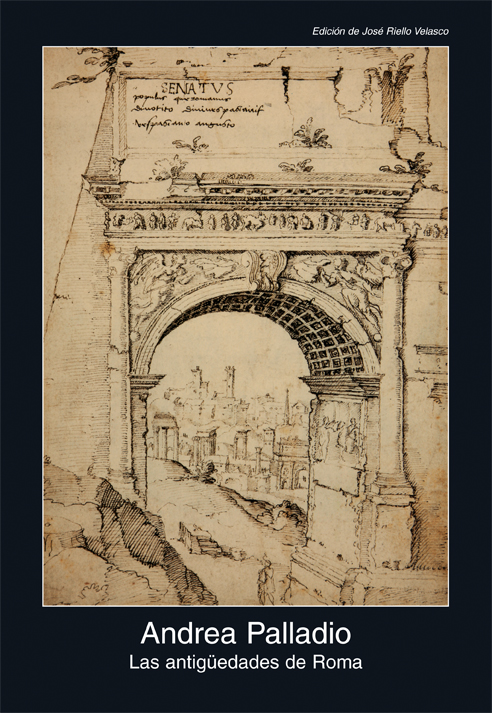
https://www.imosver.com/en/libros/antiguedades-de-roma-00100133590010013359Antiguedades de roma19.95El arquitecto vicentino Andrea Palladio (1508-1580) viajó en cuatro ocasiones, quizá cinco, a Roma. Probablemente como consecuencia de su último viaje de 1554, y aprovechando el bagaje que los anteriohttps://static.imosver.com/imagenes_small/9788446/978844602697.jpgLibrosLibros/ARTE, ARQUITECTURA, CINE Y FOTOGRAFIAEn stockAKAL000https://static.imosver.com/imagenes_small/9788446/978844602697.jpgAGP0034525ALO0048374001002166316605200012151.052008/11/019788446026976Palladio, AndreaLibrosaño_2008idioma_SpanishCformato_No definidoautor_Palladio, Andreasaga_FUENTES DE ARTE
Artículo
Antiguedades de roma
Palladio Andrea
AKAL
ARTE, ARQUITECTURA, CINE
Cookie notice
We use cookies to ensure you get the best experience on our site
Read cookie policy.
Manage cookie preferences
This type of cookie allows the user to browse a website, platform, or application and to use the different options or services that exist on it.
imosver_session
Description
Essential first-party cookie. It keeps your session identified while you browse: your basket, your language and access to your account. The website cannot work without it.
Duration
120 minutes
Facilities
Domain
imosver.com
OCT8NE
Description
This cookie is used for the proper functioning of the Oct8ne Chat to provide customer support service to the user.
These are those that enable the tracking and analysis of user behavior on our website. The information collected is used to measure user activity on the website and to create user browsing profiles.
_clsk
Description
Microsoft Clarity first-party cookie. It groups the pages you visit into a single session in order to analyse your journey through the website.
Duration
1 days
Facilities
Domain
imosver.com
logglytrackingsession
Description
Identifies and records the user session for analytical purposes.
Duration
Session
Facilities
Domain
.imosver.com
GOOGLE_ANALYTICS
Description
Records a unique identifier that is used to generate statistical data about how the visitor uses the website.
Duration
1 Year
Facilities
Domain
.imosver.com
_clck
Description
Microsoft Clarity first-party cookie. It stores an anonymous browser identifier so that visits to this website can be attributed to the same user and usage statistics can be produced.
Duration
1 Year
Facilities
Domain
imosver.com
CLID
Description
Microsoft Clarity third-party cookie. It identifies the first time Clarity detects this browser on any website using the service.
Duration
1 Year
Facilities
Domain
clarity.ms
_ga
Description
Google Analytics cookie. It stores an anonymous browser identifier in order to distinguish users and produce website usage statistics.
Duration
2 Year
Facilities
Domain
.imosver.com
_ga_LZR660YW0M
Description
Google Analytics 4 cookie. It keeps the analytics session state so that visits and the journey through the website can be measured.
Duration
2 Year
Facilities
Domain
.imosver.com
These are the ones that allow us to adapt the navigation on our website to your preferences (e.g., language, browser used, etc.).
_fbp
Description
Used by Facebook to offer a series of advertising products, such as real-time bids from third-party advertisers.
Duration
3 Month
Facilities
Domain
.imosver.com
afiliado
Description
First-party affiliate programme cookie. It stores for 30 days the code of the affiliate that brought you to the website, so that the sale can be attributed to them.
Duration
1 Month
Facilities
Domain
imosver.com
MUID
Description
Microsoft third-party cookie. It identifies unique browsers visiting Microsoft sites and is used for advertising, analytics and other operational purposes.
Duration
1 Year
Facilities
Domain
clarity.ms
ANONCHK
Description
Microsoft third-party cookie. It indicates whether the MUID identifier is transferred to ANID, a cookie used for advertising purposes.
Duration
10 minutes
Facilities
Domain
clarity.ms
MR
Description
Microsoft third-party cookie. It indicates whether the MUID identifier must be refreshed.
Duration
7 days
Facilities
Domain
clarity.ms
SM
Description
Microsoft third-party cookie. It synchronises the MUID identifier across Microsoft domains.
Duration
Session
Facilities
Domain
clarity.ms
_fbc
Description
Meta cookie. It stores the identifier of the Facebook or Instagram advert you arrived from, in order to attribute the visit to that advertising campaign.
Duration
3 Month
Facilities
Domain
.imosver.com
_gcl_au
Description
Google Ads cookie. It records a visit coming from an advert so that advertising campaign conversions can be measured.
Duration
3 Month
Facilities
Domain
.imosver.com
_uetsid
Description
Microsoft Advertising cookie. It identifies your browsing session in order to measure conversions from Bing advertising campaigns.
Duration
1 days
Facilities
Domain
.imosver.com
_uetvid
Description
Microsoft Advertising cookie. It identifies your browser across visits in order to measure conversions from Bing advertising campaigns.
El arquitecto vicentino Andrea Palladio (1508-1580) viajó en cuatro ocasiones, quizá cinco, a Roma. Probablemente como consecuencia de su último viaje de 1554, y aprovechando el bagaje que los anteriores le habían procurado en lo referente al estudio de los restos antiguos y a la medición de las ruinas, escribió este opúsculo sobre las antigüedades romanas que fue publicado a la par en Roma y en Venecia ese mismo año. Diferenciándose de las obras coetáneas más importantes de la naciente primera arqueología, Palladio no propone un itinerario topográfico por la ciudad antigua como era usual, sino un recorrido rigurosamente tipológico, de la misma manera en que lo haría después pormenorizadamente en su trabajo teórico más notable, Los cuatro libros de la arquitectura de 1570. Acueductos, termas, circos, teatros, anfiteatros y arcos triunfales se suceden en el libro de Palladio como un revelador compendio de tipologías, obviando su situación en el entramado urbano como criterio organizador. El discurso palladiano, aun dando cabida a algunos capítulos sobre instituciones y costumbres antiguas, es plenamente arquitectónico, de forma que esta primera obra se manifiesta como un primer ensayo en esa codificación del lenguaje clásico de la arquitectura que Palladio acometió a lo largo de carrera. Aquí se recoge, con un importante conjunto de notas, la primera edición crítica publicada hasta ahora sobre esta relevante obra de Palladio.Aquí se recoge, con un importante conjunto de notas, la primera edición crítica publicada hasta ahora sobre Las antigüedades de Roma, obra de Palladio.