- Books
- History books
- DEMOCRACIAS DESTRONADAS
- Books
- History books
- DEMOCRACIAS DESTRONADAS
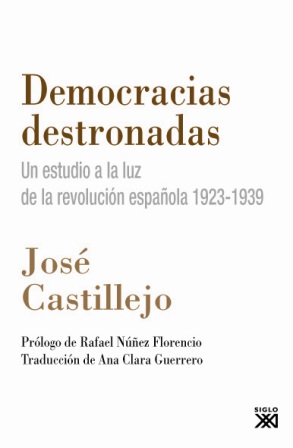
Synopsis DEMOCRACIAS DESTRONADAS
Hasta hoy inédito, este texto lo conforman las páginas que escribió José Castillejo para entender el drama español y extraer lecciones para el futuro. Escrito a partir de notas y materiales utilizados para unas conferencias impartidas por el autor a lo largo de 1938 y 1939, este libro surgió en un marco histórico en el que las democracias se hundían una tras otra. En el caso concreto de España, una monarquía cayó en 1868, otra en 1873, una primera república en 1874, una nueva monarquía en 1931, y una segunda república en 1936. Estas transformaciones políticas se produjeron con el mismo tipo de hombres, las mismas tradiciones, los mismos métodos y condiciones externas similares. La España republicana era el mismo país monárquico de la víspera, que a su vez ya había sido republicano antes. En muchos casos ni siquiera los líderes cambiaron. Este libro intenta esbozar una interpretación diferente vinculada a la crisis política universal de nuestro tiempo. «Y así, llevado de tan santa ira, señaló a José Castillejo como el hombre más terriblemente funesto que había visto nacer España.» La acusación procede de Enrique Suñer, la referencia proviene de Santos Juliá y el contexto no es otro que el ajuste de cuentas ideológico, tras el otro ajuste -a tiro limpio-, que realizan los vencedores de la Guerra Civil. Rafael Núñez FlorencioEL LARGO VIAJE DE DEMOCRACIAS DESTRONADAS, Ana Clara Guerrero, IX -- PROLOGO, Rafael Núñez Florencio, XV -- NOTA PRELIMINAR DEL AUTOR, XXIX -- PREFACIO DEL AUTOR: DE LA FICCION A LA HISTORIA, XXXI -- 1. EL MARCO HISTORICO, 1 -- I. LA BOSQUEDA DE LA LIBERTAD DENTRO DE LA LEY, 1 -- II. DE LOS ROMANOS A LOS HABSBURGO, 3 -- III. LOS BORBONES, 7 -- IV. LA LUCHA CONSTITUCIONAL DEL SIGLO XIX, 8 -- V. EL ASCENSO DE LA DEMOCRACIA, 12 -- VI. LA GENERACION DEL 98, 14 -- VII. EL SOCIALISMO IRRUMPE EN LA ESCENA POLITICA, 16 -- VIII. EL LIBERALISMO COMO ARBITRO, 17 -- IX. ¿SOCIALISMO EVOLUTIVO O SOCIAL LIBERALISMO?, 21 -- X. INTELECTUALES Y EJERCITO, 25 -- XI. LA DICTADURA, 28 -- 2. LA SEGUNDA REPOBLICA, 33 -- I. TEMORES Y DUDAS, 33 -- II. UNA CONSTITUCION ELASTICA, 37 -- III. REVOLUCION POR LA FUERZA Y REVOLUCION SEGON LA LEY. 43 -- IV. LAS REVOLUCIONES REPUBLICANAS, 44 -- V. EL PAPEL DE LA VIOLENCIA, 47 -- VI. EL ATAVIO REPUBLICANO, 49 -- VII. LOS PARTIDOS POLITICOS, 51 -- VIII. LOS LIDERES POLITICOS, 56 -- IX. LAS TRES LEGISLATURAS, 59 -- X. PREPARADOS PARA LA GUERRA CIVIL, 63 -- 3. PRINCIPALES REFORMAS DE LA REPOBLICA, 67 -- I. LA POSICION DE LA IGLESIA, 67 -- I.1. Los privilegios de los católicos, 70 -- I.2. Las finanzas de la Iglesia, 72 -- I.3. La revolución anticlerical, 74 -- II. LA REFORMA AGRARIA, 75 -- II.1. La división de los latifundios, 77 -- II.2. Los arrendatarios, 79 -- II.3. El control de la producción, 81 -- III. LAS REFORMAS ECONOMICAS Y SOCIALES, 83 -- III.1. La planificación económica, 84 -- III.2. La justicia social, 87 -- IV. LA JUSTICIA, 90 -- V. LA DEFENSA Y LA ADMINISTRACION, 93 -- V.1. El Ejército y la Marina, 93 -- V.2. La administración pública, 95 -- VI. EL NACIONALISMO, 97 -- VI.1. La autonomía de Cataluña, 99 -- VI.2. Otras peticiones de autogobierno, 101 -- VII. EDUCACION E INTELECTUALES, 103 -- VII.1. Educación popular, 103 -- VII.2. Universidades e investigación, 106 -- VII.3. Un gobierno de catedráticos, 108 -- 4. REVOLUCION Y GUERRA CIVIL, 111 -- I. LA DESINTEGRACION, 111 -- II. LA AUTENTICA ESCISION, 112 -- III. LOS GOBIERNOS REPUBLICANOS, 119 -- IV. EL GOBIERNO NACIONAL, 131 -- V. LA POLITICA ECONOMICA, 137 -- VI. LA JUSTICIA, 144 -- VII. EL EJERCITO Y LA MARINA, 147 -- VIII. LAS CLASES SOCIALES, 156 -- IX. EL COLAPSO DE LA REPOBLICA, 163 -- 5. LA ESPAÑA NACIONALSINDICALISTA, 167 -- I. SANCIONES, 170 -- II. TRADICIONALISMO, 172 -- III. UNIDAD, 174 -- IV. PROBLEMAS ECONOMICOS, 181 -- V. LA DISPERSION DE LOS INTELECTUALES, 184 -- 6. EL ENTRAMADO INTERNACIONAL, 189 -- I. LA POSICION INTERNACIONAL DE ESPAÑA, 189 -- II. LA GUERRA CIVIL Y LAS POTENCIAS, 191 -- III. LA POSICION DE LOS NEUTRALES, 193 -- IV. EL PLAN DE NO INTERVENCION, 194 -- V. LA DIVISION DE LA OPINION MUNDIAL, 200 -- 7. RESPONSABILIDADES Y LECCIONES, 207 -- I. LA BOSQUEDA DE CULPABLES, 207 -- II. LAS PRESUNTAS CAUSAS DEL FRACASO, 209 -- III. LOS ERRORES POLITICOS, 213 -- IV. LA OMNIPOTENCIA DEMOCRATICA, 215 -- V. REVOLUCION VERSUS DEMOCRACIA, 219 -- VI. TRES INTERPRETACIONES DE DEMOCRACIA, 222 -- VII. EL NACIMIENTO DE LAS DEMOCRACIAS, 226 -- VIII. CONDICIONES POLITICAS DE LA DEMOCRACIA. UNA FE COMON Y UN DERECHO COMON, 228 -- IX. LIMITACIONES DE LA DEMOCRACIA, 234 -- IX.1. Justicia, 234 -- IX.2. Moralidad, 237 -- IX.3. Continuidad, 238 -- IX.4. Prohibición de la violencia, 241 -- X. EL PAPEL DE LOS INTELECTUALES EN LA VIDA POBLICA, 242 -- XI ¿PUEDE EL SOCIALISMO SER DEMOCRATICO?, 247 -- XII. LOS ESTADOS TOTALITARIOS, 252 -- XIII. EL CAPITALISMO DE ESTADO, 254 -- XIV. LA PLANIFICACION ECONOMICA, 259 -- XV. LA VOZ DEL LIBERALISMO, 265 -- XVI. LA DEMOCRACIA INTERNACIONAL, 270 -- INDICE ANALITICO, 279José Castillejo (1877-1945) fue un pedagogo español, creador del Instituto-Escuela. Desde 1898 estuvo vinculado a la Institución Libre de Enseñanza y contribuyó con una famosa capacidad de gestión a sistematizar la estructura pedagógica de la obra institucionista desde el puesto de secretario de la Junta para Ampliación de Estudios e Investigaciones Científicas (1907). Intervino en la creación de la Residencia de Estudiantes (1910) y del Centro de Estudios Históricos. Otras obras suyas son La educación en Inglaterra (1930), Historia del Derecho Romano (1935) y Guerra de ideas en España (1976), publicada primero en inglés y de próxima publicación en Siglo XXI.
EAN
9788432313479
Publisher
Edition year
2008
Binding
Soft cover or pocket
Language
Spanish
Collection
BIBLIOTECA JOSE CASTILLEJO
Height
210
Width
135