https://www.imosver.com/en/libros/historia-de-los-medios-de-comunicacion-en-espana-CIM0018845CIM0018845Historia de los medios de comunicación en España18.53Una historia de los medios de comunicación es imprescindible para conocer nuestro pasado y entender el papel social del llamado cuarto poder. De la prensa impresa a la prensa digital, atravesaremos sihttps://static.imosver.com/imagenes_small/9788413/978841352926.jpgLibrosLibros/HISTORIAEn stockCATARATA000https://static.imosver.com/imagenes_small/9788413/978841352926.jpgCIM0034846TER0016671MID001103119.550.972024/02/199788413529264Laguna Platero, AntonioLibrosaño_2024idioma_SpanishCformato_Tapa blanda o Bolsilloautor_Laguna Platero, Antoniosaga_Mayor
Artículo
Historia de los medios de
Laguna Platero Antonio
CATARATA
HISTORIA
Cookie notice
We use cookies to ensure you get the best experience on our site
Read cookie policy.
Manage cookie preferences
This type of cookie allows the user to browse a website, platform, or application and to use the different options or services that exist on it.
imosver_session
Description
Essential first-party cookie. It keeps your session identified while you browse: your basket, your language and access to your account. The website cannot work without it.
Duration
120 minutes
Facilities
Domain
imosver.com
OCT8NE
Description
This cookie is used for the proper functioning of the Oct8ne Chat to provide customer support service to the user.
These are those that enable the tracking and analysis of user behavior on our website. The information collected is used to measure user activity on the website and to create user browsing profiles.
_clsk
Description
Microsoft Clarity first-party cookie. It groups the pages you visit into a single session in order to analyse your journey through the website.
Duration
1 days
Facilities
Domain
imosver.com
logglytrackingsession
Description
Identifies and records the user session for analytical purposes.
Duration
Session
Facilities
Domain
.imosver.com
GOOGLE_ANALYTICS
Description
Records a unique identifier that is used to generate statistical data about how the visitor uses the website.
Duration
1 Year
Facilities
Domain
.imosver.com
_clck
Description
Microsoft Clarity first-party cookie. It stores an anonymous browser identifier so that visits to this website can be attributed to the same user and usage statistics can be produced.
Duration
1 Year
Facilities
Domain
imosver.com
CLID
Description
Microsoft Clarity third-party cookie. It identifies the first time Clarity detects this browser on any website using the service.
Duration
1 Year
Facilities
Domain
clarity.ms
_ga
Description
Google Analytics cookie. It stores an anonymous browser identifier in order to distinguish users and produce website usage statistics.
Duration
2 Year
Facilities
Domain
.imosver.com
_ga_LZR660YW0M
Description
Google Analytics 4 cookie. It keeps the analytics session state so that visits and the journey through the website can be measured.
Duration
2 Year
Facilities
Domain
.imosver.com
These are the ones that allow us to adapt the navigation on our website to your preferences (e.g., language, browser used, etc.).
_fbp
Description
Used by Facebook to offer a series of advertising products, such as real-time bids from third-party advertisers.
Duration
3 Month
Facilities
Domain
.imosver.com
afiliado
Description
First-party affiliate programme cookie. It stores for 30 days the code of the affiliate that brought you to the website, so that the sale can be attributed to them.
Duration
1 Month
Facilities
Domain
imosver.com
MUID
Description
Microsoft third-party cookie. It identifies unique browsers visiting Microsoft sites and is used for advertising, analytics and other operational purposes.
Duration
1 Year
Facilities
Domain
clarity.ms
ANONCHK
Description
Microsoft third-party cookie. It indicates whether the MUID identifier is transferred to ANID, a cookie used for advertising purposes.
Duration
10 minutes
Facilities
Domain
clarity.ms
MR
Description
Microsoft third-party cookie. It indicates whether the MUID identifier must be refreshed.
Duration
7 days
Facilities
Domain
clarity.ms
SM
Description
Microsoft third-party cookie. It synchronises the MUID identifier across Microsoft domains.
Duration
Session
Facilities
Domain
clarity.ms
_fbc
Description
Meta cookie. It stores the identifier of the Facebook or Instagram advert you arrived from, in order to attribute the visit to that advertising campaign.
Duration
3 Month
Facilities
Domain
.imosver.com
_gcl_au
Description
Google Ads cookie. It records a visit coming from an advert so that advertising campaign conversions can be measured.
Duration
3 Month
Facilities
Domain
.imosver.com
_uetsid
Description
Microsoft Advertising cookie. It identifies your browsing session in order to measure conversions from Bing advertising campaigns.
Duration
1 days
Facilities
Domain
.imosver.com
_uetvid
Description
Microsoft Advertising cookie. It identifies your browser across visits in order to measure conversions from Bing advertising campaigns.
Synopsis Historia de los medios de comunicación en España
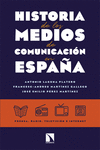
Una historia de los medios de comunicación es imprescindible para conocer nuestro pasado y entender el papel social del llamado cuarto poder. De la prensa impresa a la prensa digital, atravesaremos siglos y revoluciones, recalaremos en los nuevos medios de masas basados en la imagen y el sonido para concluir en un presente pleno de interrogantes. En el siglo XIX, los periódicos en España ya se contaban por centenares. Moderados y progresistas tenían sus propias cabeceras, y el periódico de partido se fue imponiendo al igual que las distintas agrupaciones políticas. Tras la guerra de Cuba, el oficio de periodista ya se había consolidado por completo. Los dibujos y fotografías iban reduciendo cada vez más los textos y la enorme competencia consolidó el sensacionalismo: la exageración, la provocación y, sobre todo, la emoción fueron utilizadas para incrementar la venta de ejemplares. La dictadura de Primo de Rivera vería nacer el gran primer medio de masas y la guerra civil española fue el primer conflicto bélico que se libró en las ondas: la radio sirvió de laboratorio de propaganda y desinformación. Siguieron años de censura y consigna, los del franquismo, del eficaz anestésico de Radio Nacional de España, del NO-DO y de la llegada de la televisión en riguroso directo. Y con la democracia llegó la pluralidad, el llamado parlamento de papel, pero también los concursos de licencias y los favoritismos. A partir del 2000, internet ya ofrecía ilimitados estímulos y el periodismo ciudadano derivó en una práctica amateur que contribuyó a desprestigiar la profesión y a difundir innumerables fake news. Ahora que antiguos y nuevos medios compiten por una audiencia más fragmentada que nunca, repasar la historia resulta imprescindible para vislumbrar que la información desde el rigor tiene todavía un largo recorrido para la audiencia exigente.