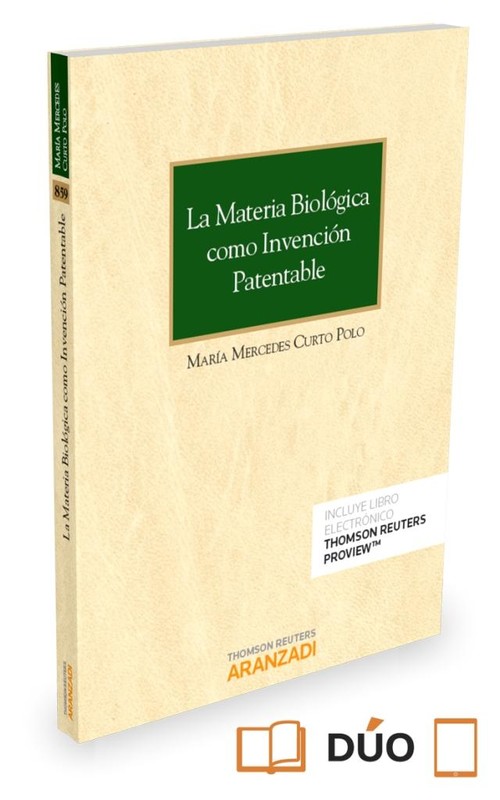
https://www.imosver.com/en/libros/la-materia-biologica-como-invencion-patentable-papel-e-book-00104919000010491900LA MATERIA BIOLOGICA COMO INVENCION PATENTABLE (PAPEL + E-BOOK)33.25De acuerdo con el Derecho de patentes vigente, es posible proteger mediante patente, en el ámbito de la Biotecnología, entre otros, plantas, animales, microorganismos o elementos aislados del cuerpo hhttps://static.imosver.com/imagenes_small/9788491/978849152137.jpgLibrosLibros/DERECHOSin stockARANZADI000https://static.imosver.com/imagenes_small/9788491/978849152137.jpgCIM00157463551.752017/01/119788491521372Curto Polo, MercedesLibrosaño_2017idioma_SpanishCformato_Libroautor_Curto Polo, Mercedessaga_MONOGRAFIAS
Artículo
LA MATERIA BIOLOGICA COMO
Curto Polo Mercedes
ARANZADI
DERECHO
Cookie notice
We use cookies to ensure you get the best experience on our site
Read cookie policy.
Manage cookie preferences
This type of cookie allows the user to browse a website, platform, or application and to use the different options or services that exist on it.
imosver_session
Description
Essential first-party cookie. It keeps your session identified while you browse: your basket, your language and access to your account. The website cannot work without it.
Duration
120 minutes
Facilities
Domain
imosver.com
OCT8NE
Description
This cookie is used for the proper functioning of the Oct8ne Chat to provide customer support service to the user.
These are those that enable the tracking and analysis of user behavior on our website. The information collected is used to measure user activity on the website and to create user browsing profiles.
_clsk
Description
Microsoft Clarity first-party cookie. It groups the pages you visit into a single session in order to analyse your journey through the website.
Duration
1 days
Facilities
Domain
imosver.com
logglytrackingsession
Description
Identifies and records the user session for analytical purposes.
Duration
Session
Facilities
Domain
.imosver.com
GOOGLE_ANALYTICS
Description
Records a unique identifier that is used to generate statistical data about how the visitor uses the website.
Duration
1 Year
Facilities
Domain
.imosver.com
_clck
Description
Microsoft Clarity first-party cookie. It stores an anonymous browser identifier so that visits to this website can be attributed to the same user and usage statistics can be produced.
Duration
1 Year
Facilities
Domain
imosver.com
CLID
Description
Microsoft Clarity third-party cookie. It identifies the first time Clarity detects this browser on any website using the service.
Duration
1 Year
Facilities
Domain
clarity.ms
_ga
Description
Google Analytics cookie. It stores an anonymous browser identifier in order to distinguish users and produce website usage statistics.
Duration
2 Year
Facilities
Domain
.imosver.com
_ga_LZR660YW0M
Description
Google Analytics 4 cookie. It keeps the analytics session state so that visits and the journey through the website can be measured.
Duration
2 Year
Facilities
Domain
.imosver.com
These are the ones that allow us to adapt the navigation on our website to your preferences (e.g., language, browser used, etc.).
_fbp
Description
Used by Facebook to offer a series of advertising products, such as real-time bids from third-party advertisers.
Duration
3 Month
Facilities
Domain
.imosver.com
afiliado
Description
First-party affiliate programme cookie. It stores for 30 days the code of the affiliate that brought you to the website, so that the sale can be attributed to them.
Duration
1 Month
Facilities
Domain
imosver.com
MUID
Description
Microsoft third-party cookie. It identifies unique browsers visiting Microsoft sites and is used for advertising, analytics and other operational purposes.
Duration
1 Year
Facilities
Domain
clarity.ms
ANONCHK
Description
Microsoft third-party cookie. It indicates whether the MUID identifier is transferred to ANID, a cookie used for advertising purposes.
Duration
10 minutes
Facilities
Domain
clarity.ms
MR
Description
Microsoft third-party cookie. It indicates whether the MUID identifier must be refreshed.
Duration
7 days
Facilities
Domain
clarity.ms
SM
Description
Microsoft third-party cookie. It synchronises the MUID identifier across Microsoft domains.
Duration
Session
Facilities
Domain
clarity.ms
_fbc
Description
Meta cookie. It stores the identifier of the Facebook or Instagram advert you arrived from, in order to attribute the visit to that advertising campaign.
Duration
3 Month
Facilities
Domain
.imosver.com
_gcl_au
Description
Google Ads cookie. It records a visit coming from an advert so that advertising campaign conversions can be measured.
Duration
3 Month
Facilities
Domain
.imosver.com
_uetsid
Description
Microsoft Advertising cookie. It identifies your browsing session in order to measure conversions from Bing advertising campaigns.
Duration
1 days
Facilities
Domain
.imosver.com
_uetvid
Description
Microsoft Advertising cookie. It identifies your browser across visits in order to measure conversions from Bing advertising campaigns.
Synopsis LA MATERIA BIOLOGICA COMO INVENCION PATENTABLE (PAPEL + E-BOOK)
De acuerdo con el Derecho de patentes vigente, es posible proteger mediante patente, en el ámbito de la Biotecnología, entre otros, plantas, animales, microorganismos o elementos aislados del cuerpo humano, incluidos genes humanos, si se cumplen determinados requisitos. La apropiación de la materia viva mediante patente ha suscitado una creciente polémica en la medida en que, aunque sea aislada o purificada a través de medios técnicos, dicha materia existe normalmente en la naturaleza con anterioridad a la manipulación humana. Pese a que se ha tratado de adaptar el Derecho de patentes a las características propias de estas nuevas invenciones, existen todavía en el momento actual importantes cuestiones abiertas en relación con los requisitos de patentabilidad aplicados a la materia viva o respecto al ámbito de protección que debe ser otorgado a las patentes biotecnológicas, así como a las limitaciones a las que deben ser sometidas. Por ello, parece un momento oportuno para hacer una profunda reflexión en torno a la patentabilidad de la materia viva teniendo siempre presente el fin propio del Derecho de patentes, cual es asegurar un adecuado equilibrio entre la recompensa al inventor por el esfuerzo realizado y los intereses de la comunidad en poder disponer de una invención que puede ser crucial en el avance tecnológico. En la obra que ahora ve la luz se analiza en profundidad el estado actual de estas cuestiones en Derecho Comparado, prestando especial atención a la legislación estadounidense y europea, así como a los principales pronunciamientos de las oficinas y tribunales al respecto, para poder ofrecer una revisión argumentada sobre la temática, así como ciertas propuestas de futuro. Todo ello determina que la presente monografía sea de interés para un público amplio, en el que se incluyen teóricos y prácticos del Derecho, pero también profesionales en los ámbitos de las Ciencias de la vida (Biología y Biotecnología, fundamentalmente) que quieran conocer el estado actual de la protección jurídica de los resultados de su investigación.