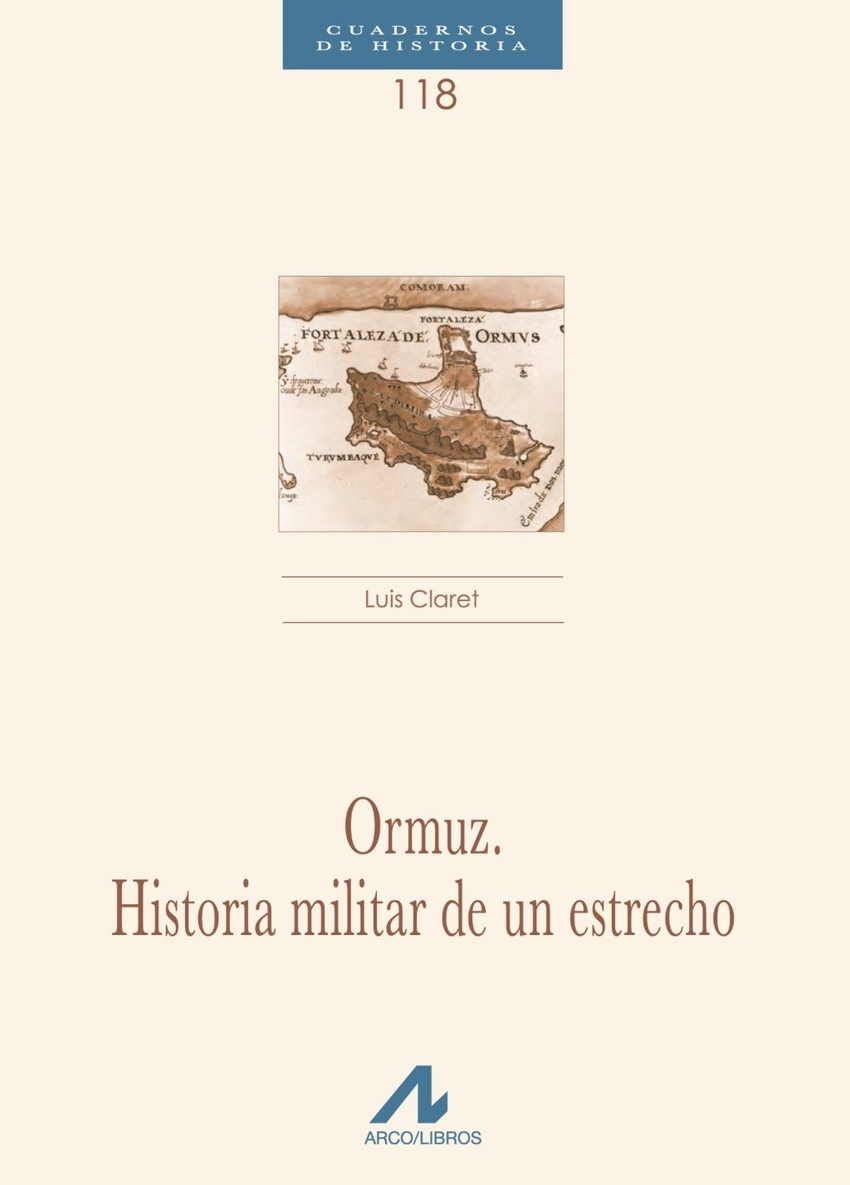
https://www.imosver.com/en/libros/ormuzhistoria-militar-de-un-estrecho-MAR0017991MAR0017991Ormuz:historia militar de un estrecho10.45El estrecho de Ormuz ù33 kilómetros en su punto más angosto, por el que circula en torno a la quinta parte del petróleo consumido en el planetaù no es un accidente geográfico más: es uno de esos raroshttps://static.imosver.com/imagenes_small/9788476/978847635739.jpgLibrosLibros/HISTORIAEn stockARCO-LIBROS000https://static.imosver.com/imagenes_small/9788476/978847635739.jpg1150.552026/09/019788476357392Claret, LuisLibrosaño_2026idioma_SpanishCautor_Claret, Luissaga_CUADERNOS DE HISTORIA
Artículo
Ormuz:historia militar de
Claret Luis
IMAGINE CONTENT, S.L
ARCO-LIBROS
HISTORIA
Cookie notice
We use cookies to ensure you get the best experience on our site
Read cookie policy.
Manage cookie preferences
This type of cookie allows the user to browse a website, platform, or application and to use the different options or services that exist on it.
imosver_session
Description
Essential first-party cookie. It keeps your session identified while you browse: your basket, your language and access to your account. The website cannot work without it.
Duration
120 minutes
Facilities
Domain
imosver.com
OCT8NE
Description
This cookie is used for the proper functioning of the Oct8ne Chat to provide customer support service to the user.
These are those that enable the tracking and analysis of user behavior on our website. The information collected is used to measure user activity on the website and to create user browsing profiles.
_clsk
Description
Microsoft Clarity first-party cookie. It groups the pages you visit into a single session in order to analyse your journey through the website.
Duration
1 days
Facilities
Domain
imosver.com
logglytrackingsession
Description
Identifies and records the user session for analytical purposes.
Duration
Session
Facilities
Domain
.imosver.com
GOOGLE_ANALYTICS
Description
Records a unique identifier that is used to generate statistical data about how the visitor uses the website.
Duration
1 Year
Facilities
Domain
.imosver.com
_clck
Description
Microsoft Clarity first-party cookie. It stores an anonymous browser identifier so that visits to this website can be attributed to the same user and usage statistics can be produced.
Duration
1 Year
Facilities
Domain
imosver.com
CLID
Description
Microsoft Clarity third-party cookie. It identifies the first time Clarity detects this browser on any website using the service.
Duration
1 Year
Facilities
Domain
clarity.ms
_ga
Description
Google Analytics cookie. It stores an anonymous browser identifier in order to distinguish users and produce website usage statistics.
Duration
2 Year
Facilities
Domain
.imosver.com
_ga_LZR660YW0M
Description
Google Analytics 4 cookie. It keeps the analytics session state so that visits and the journey through the website can be measured.
Duration
2 Year
Facilities
Domain
.imosver.com
These are the ones that allow us to adapt the navigation on our website to your preferences (e.g., language, browser used, etc.).
_fbp
Description
Used by Facebook to offer a series of advertising products, such as real-time bids from third-party advertisers.
Duration
3 Month
Facilities
Domain
.imosver.com
afiliado
Description
First-party affiliate programme cookie. It stores for 30 days the code of the affiliate that brought you to the website, so that the sale can be attributed to them.
Duration
1 Month
Facilities
Domain
imosver.com
MUID
Description
Microsoft third-party cookie. It identifies unique browsers visiting Microsoft sites and is used for advertising, analytics and other operational purposes.
Duration
1 Year
Facilities
Domain
clarity.ms
ANONCHK
Description
Microsoft third-party cookie. It indicates whether the MUID identifier is transferred to ANID, a cookie used for advertising purposes.
Duration
10 minutes
Facilities
Domain
clarity.ms
MR
Description
Microsoft third-party cookie. It indicates whether the MUID identifier must be refreshed.
Duration
7 days
Facilities
Domain
clarity.ms
SM
Description
Microsoft third-party cookie. It synchronises the MUID identifier across Microsoft domains.
Duration
Session
Facilities
Domain
clarity.ms
_fbc
Description
Meta cookie. It stores the identifier of the Facebook or Instagram advert you arrived from, in order to attribute the visit to that advertising campaign.
Duration
3 Month
Facilities
Domain
.imosver.com
_gcl_au
Description
Google Ads cookie. It records a visit coming from an advert so that advertising campaign conversions can be measured.
Duration
3 Month
Facilities
Domain
.imosver.com
_uetsid
Description
Microsoft Advertising cookie. It identifies your browsing session in order to measure conversions from Bing advertising campaigns.
Duration
1 days
Facilities
Domain
.imosver.com
_uetvid
Description
Microsoft Advertising cookie. It identifies your browser across visits in order to measure conversions from Bing advertising campaigns.
El estrecho de Ormuz ù33 kilómetros en su punto más angosto, por el que circula en torno a la quinta parte del petróleo consumido en el planetaù no es un accidente geográfico más: es uno de esos raros lugares donde la morfología litoral y la historia política se funden durante dos milenios y medio sin cambiar de escenario. Este libro sostiene una tesis tan modesta como necesaria: casi todas las decisiones militares tomadas en Ormuz, desde la expedición de Nearco (siglo IV a. C.) hasta 2026, son variaciones sobre un conjunto muy reducido de constricciones físicas. Quien no las comprende reduce la historia del estrecho a una sucesión de anécdotas. El libro traza esa historia en nueve capítulos. Desde la talasocracia mercantil del reino medieval de Ormuz ùque controlaba el paso sin necesitar una flota propiaù hasta la doctrina de las cuatro llaves formulada por Alburquerque a comienzos del siglo XVI, que convirtió el cierre de los estrechos estratégicos del Índico en política de Estado. Desde la alianza anglo-persa de 1622, que expulsó a Portugal y redefinió el Golfo moderno, hasta la paz imperial británica que mantuvo el paso abierto durante siglo y medio. Desde la guerra de los petroleros (1980-1988), en la que Irán descubrió el potencial asimétrico de las minas y los misiles antinavío, hasta la situación actual, en la que la amenaza de cierre se ha convertido en instrumento ordinario de presión. La conclusión es incómoda: lo que ha mantenido abierto el estrecho durante la mayor parte de su historia no ha sido nunca la fuerza de quien lo vigilaba, sino el interés de quien podía cerrarlo. Cuando ese cálculo se invierte ùpor sanción, por bloqueo o por amenaza existencialù ninguna presencia naval concebible basta para sustituirlo. Un ensayo de historia militar riguroso y de actualidad inmediata, escrito en el año en que Ormuz ha vuelto a ser una de las palabras más pronunciadas del mundo.