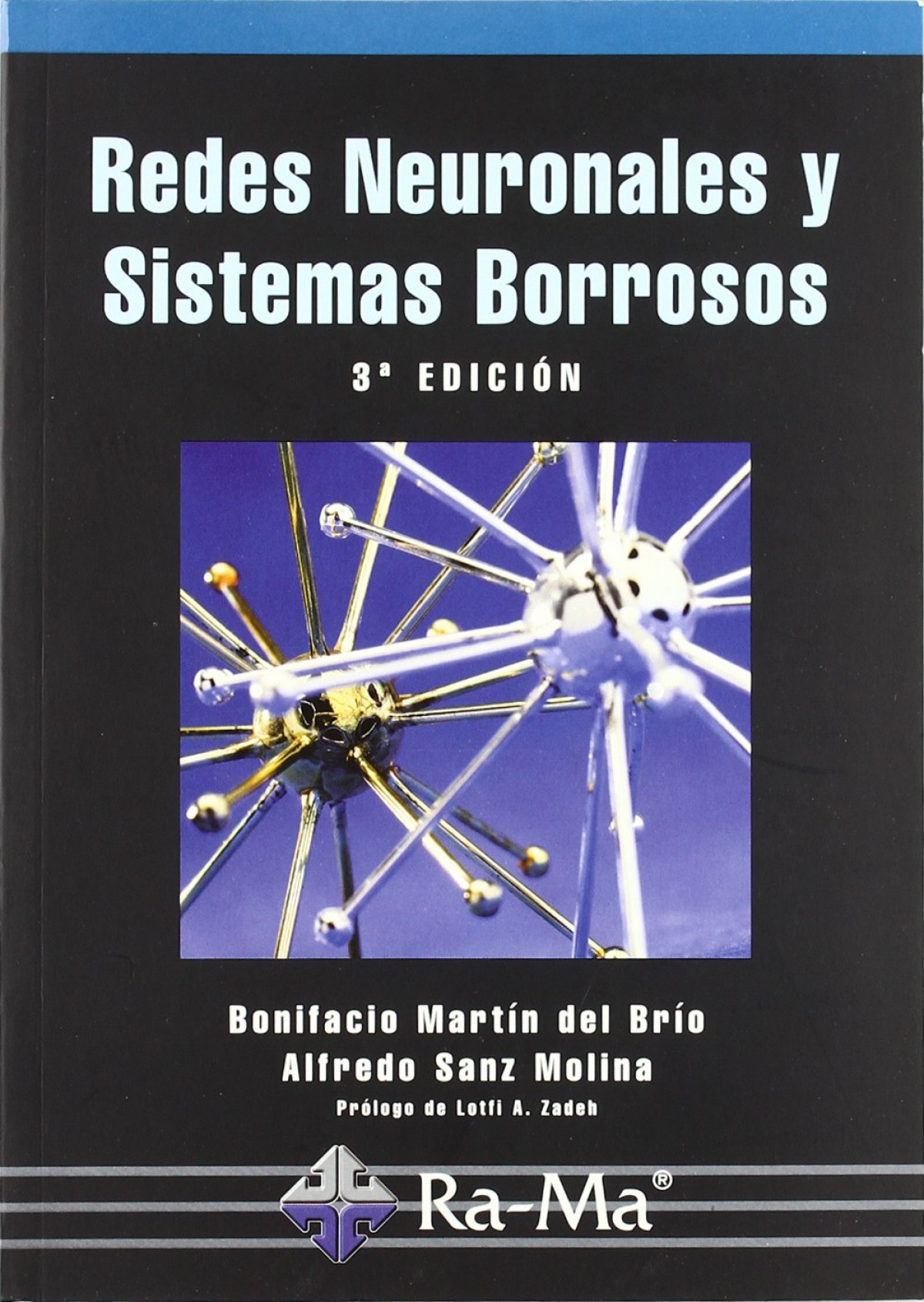
https://www.imosver.com/en/libros/redes-neuronales-y-sistemas-borrosos-00100210150010021015REDES NEURONALES Y SISTEMAS BORROSOS26.51Los sistemas digitales de cómputo actuales presentan problemas al abordar tareas del mundo real, donde la información es masiva, redundante e imprecisa. Por ello, desde hace unos años se vienen proponhttps://static.imosver.com/imagenes_small/9788478/978847897743.jpgLibrosLibros/INFORMATICAEn stockRA-MA000https://static.imosver.com/imagenes_small/9788478/978847897743.jpg27.951.392006/11/019788478977437Martin Del Brio, B./Sanz Molina, A.Librosaño_2006idioma_SpanishCformato_Tapa blanda o Bolsilloautor_Martin Del Brio, B./Sanz Molina, A.saga_INFORMATICA
Artículo
REDES NEURONALES Y SISTEM
Martin Del Brio B./Sanz M
RA-MA
INFORMATICA
Cookie notice
We use cookies to ensure you get the best experience on our site
Read cookie policy.
Manage cookie preferences
This type of cookie allows the user to browse a website, platform, or application and to use the different options or services that exist on it.
imosver_session
Description
Essential first-party cookie. It keeps your session identified while you browse: your basket, your language and access to your account. The website cannot work without it.
Duration
120 minutes
Facilities
Domain
imosver.com
OCT8NE
Description
This cookie is used for the proper functioning of the Oct8ne Chat to provide customer support service to the user.
These are those that enable the tracking and analysis of user behavior on our website. The information collected is used to measure user activity on the website and to create user browsing profiles.
_clsk
Description
Microsoft Clarity first-party cookie. It groups the pages you visit into a single session in order to analyse your journey through the website.
Duration
1 days
Facilities
Domain
imosver.com
logglytrackingsession
Description
Identifies and records the user session for analytical purposes.
Duration
Session
Facilities
Domain
.imosver.com
GOOGLE_ANALYTICS
Description
Records a unique identifier that is used to generate statistical data about how the visitor uses the website.
Duration
1 Year
Facilities
Domain
.imosver.com
_clck
Description
Microsoft Clarity first-party cookie. It stores an anonymous browser identifier so that visits to this website can be attributed to the same user and usage statistics can be produced.
Duration
1 Year
Facilities
Domain
imosver.com
CLID
Description
Microsoft Clarity third-party cookie. It identifies the first time Clarity detects this browser on any website using the service.
Duration
1 Year
Facilities
Domain
clarity.ms
_ga
Description
Google Analytics cookie. It stores an anonymous browser identifier in order to distinguish users and produce website usage statistics.
Duration
2 Year
Facilities
Domain
.imosver.com
_ga_LZR660YW0M
Description
Google Analytics 4 cookie. It keeps the analytics session state so that visits and the journey through the website can be measured.
Duration
2 Year
Facilities
Domain
.imosver.com
These are the ones that allow us to adapt the navigation on our website to your preferences (e.g., language, browser used, etc.).
_fbp
Description
Used by Facebook to offer a series of advertising products, such as real-time bids from third-party advertisers.
Duration
3 Month
Facilities
Domain
.imosver.com
afiliado
Description
First-party affiliate programme cookie. It stores for 30 days the code of the affiliate that brought you to the website, so that the sale can be attributed to them.
Duration
1 Month
Facilities
Domain
imosver.com
MUID
Description
Microsoft third-party cookie. It identifies unique browsers visiting Microsoft sites and is used for advertising, analytics and other operational purposes.
Duration
1 Year
Facilities
Domain
clarity.ms
ANONCHK
Description
Microsoft third-party cookie. It indicates whether the MUID identifier is transferred to ANID, a cookie used for advertising purposes.
Duration
10 minutes
Facilities
Domain
clarity.ms
MR
Description
Microsoft third-party cookie. It indicates whether the MUID identifier must be refreshed.
Duration
7 days
Facilities
Domain
clarity.ms
SM
Description
Microsoft third-party cookie. It synchronises the MUID identifier across Microsoft domains.
Duration
Session
Facilities
Domain
clarity.ms
_fbc
Description
Meta cookie. It stores the identifier of the Facebook or Instagram advert you arrived from, in order to attribute the visit to that advertising campaign.
Duration
3 Month
Facilities
Domain
.imosver.com
_gcl_au
Description
Google Ads cookie. It records a visit coming from an advert so that advertising campaign conversions can be measured.
Duration
3 Month
Facilities
Domain
.imosver.com
_uetsid
Description
Microsoft Advertising cookie. It identifies your browsing session in order to measure conversions from Bing advertising campaigns.
Duration
1 days
Facilities
Domain
.imosver.com
_uetvid
Description
Microsoft Advertising cookie. It identifies your browser across visits in order to measure conversions from Bing advertising campaigns.
Los sistemas digitales de cómputo actuales presentan problemas al abordar tareas del mundo real, donde la información es masiva, redundante e imprecisa. Por ello, desde hace unos años se vienen proponiendo nuevos modelos de procesamiento inspirados en las soluciones encontradas por la naturaleza durante millones de años de evolución, que podrían ayudar a resolver importantes problemas tecnológicos como los de visión, habla, control e inteligencia artificial.De entre estos nuevos modelos destacan las redes neuronales artificiales, que imitan la estructura del cerebro para reproducir algunas de sus capacidades y aprenden a realizar tareas a partir de ejemplos. Por otro lado, los sistemas borrosos (fuzzy) emulan el razonamiento aproximado de nuestro cerebro, permitiendo manejar conceptos vagos e imprecisos como los empleados en la vida cotidiana. Ambos modelos, junto con otros como los algoritmos genéticos, se enmarcan en la denominada inteligencia computacional o soft computing, complementando disciplinas clásicas como el tratamiento de señal o la inteligencia artificial, aplicándose ya a problemas muy diversos como reconocimiento de caracteres, electrodomésticos inteligentes, procesado de imagen, predicción bursátil, etc. Este libro se dirige a todo aquel que esté interesado en iniciarse en estas cuestiones, especialmente estudiantes, docentes y personal de la empresa; el único requisito es contar con una mínima base matemática, como la adquirida en estudios de ciencias, ingenierías o económicas.La primera edición (1997) fue el primer libro en español dedicado a ambos temas; desde entonces ha sido adoptado como texto de clase en diversas universidades españolas y americanas. En esta tercera edición (2006) se han actualizado algunos de sus capítulos y referencias bibliográficas, añadiéndose algunos modelos novedosos."Redes Neuronales y Sistemas Borrosos supone una valiosa contribución a la literatura de la soft computing y de los sistemas neuroborrosos. Su fácil lectura, amplio tratamiento de ejemplos reales, y la gran competencia de los autores en la materia, hacen de este texto una importante fuente de información para todo aquel interesado en comprender y familiarizarse con las herramientas básicas que proporcionan las metodologías neuronales y borrosas. Los autores y la editorial merecen nuestro agradecimiento y aplauso". Prof. Lotfi A. Zadeh, catedrático emérito de la Universidad de California en Berkeley.